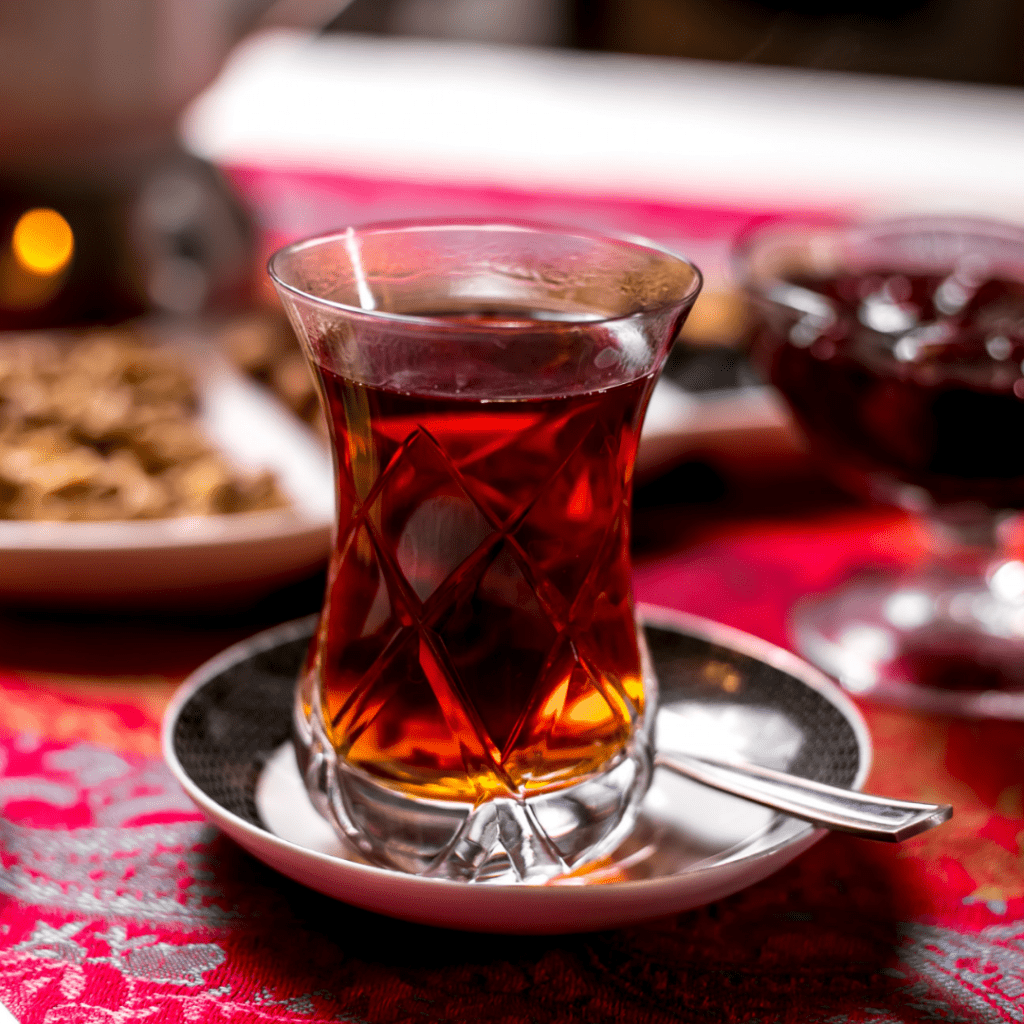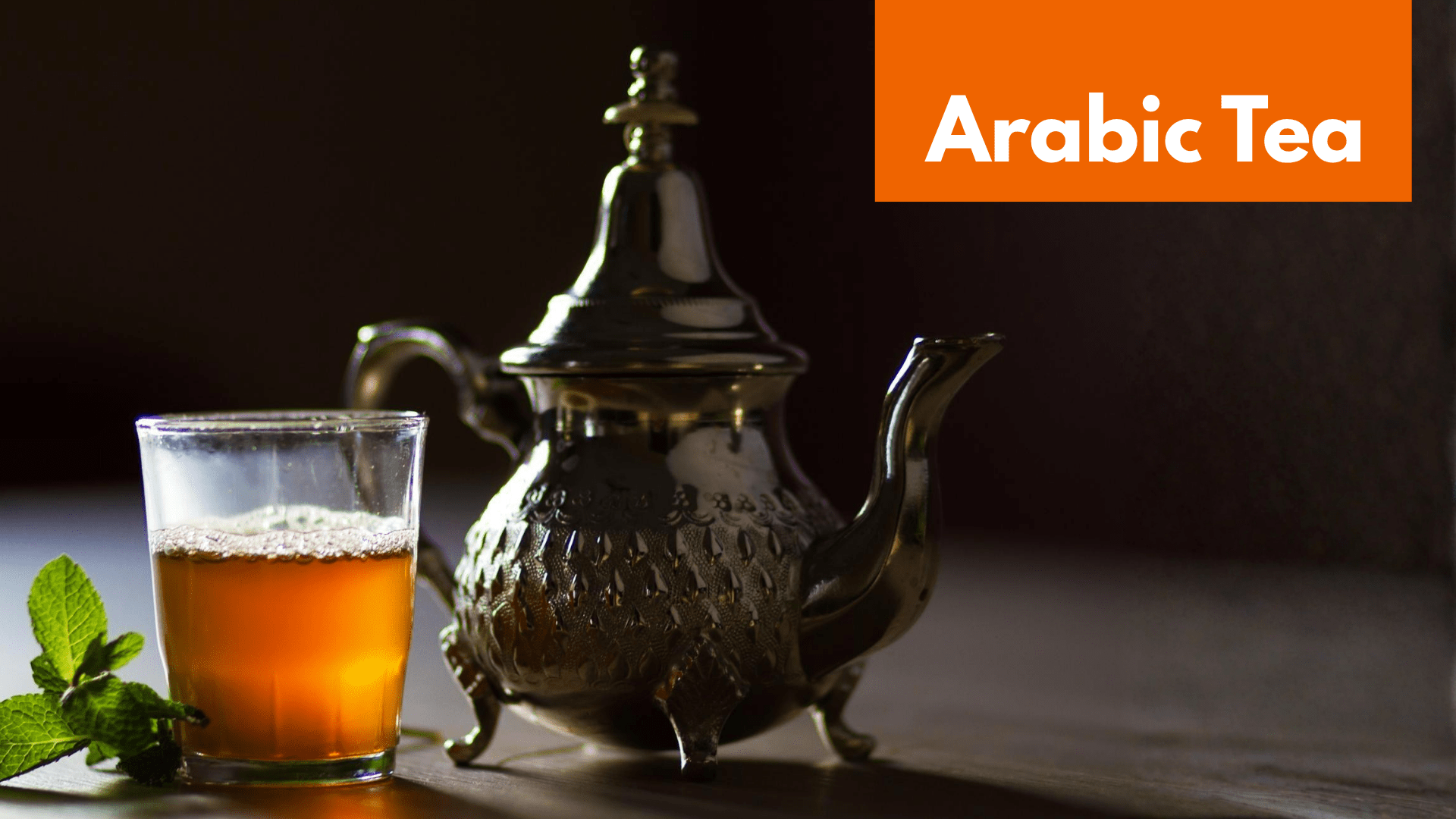
In much of the Arab world, tea is rarely just tea.
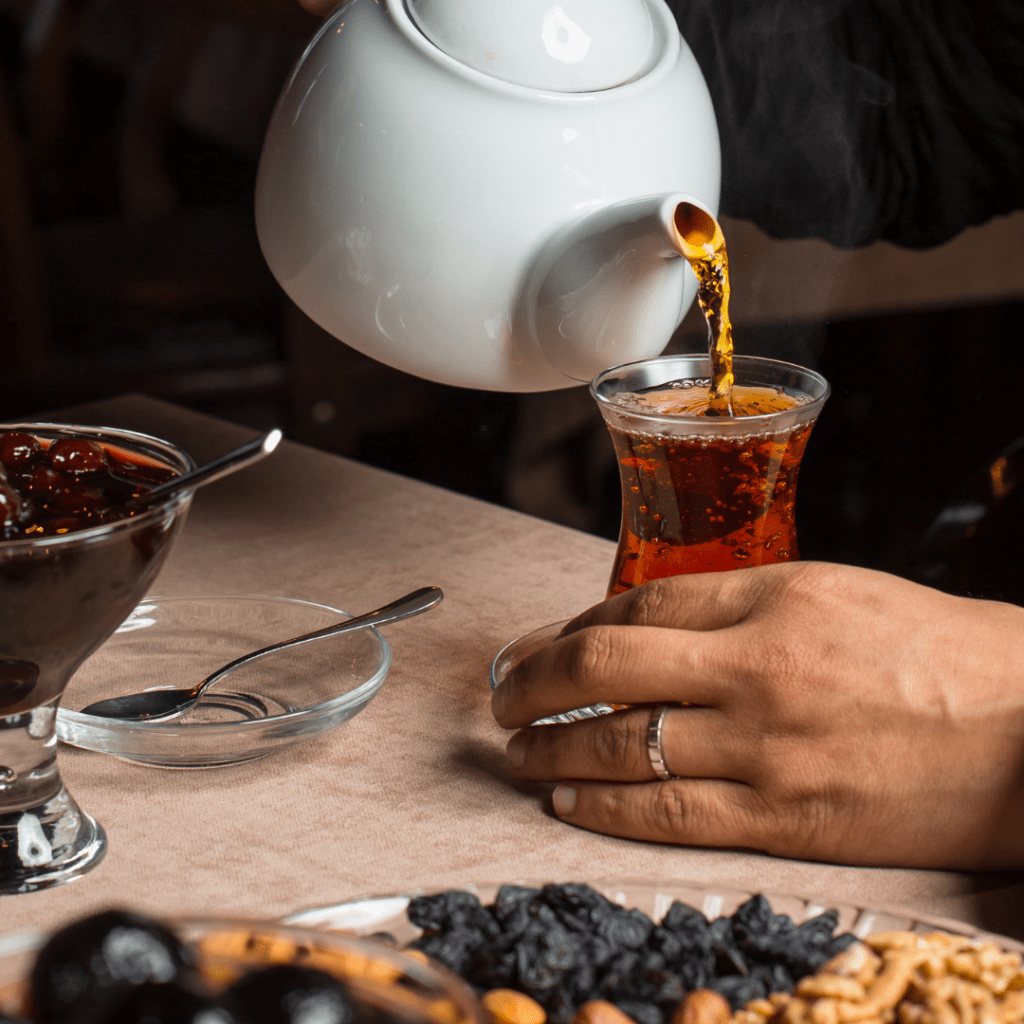
It arrives almost as soon as you do. A guest sits down, and before much is said, something warm is already being poured. It is a small gesture, but it carries a lot. Offering tea is a way of showing welcome, respect, and generosity, and that meaning sits underneath the whole tradition. The drink itself is good, but the act of sharing it is really the point.
Arabic tea covers a wide range of styles across the region, but a few things tend to hold true. It is usually strong, often spiced, frequently sweet, and almost always tied to company.
Tea reached the Arab world along the old trade routes, carried west over centuries.
Once it arrived, it took on the spices that were already part of the kitchen. Cardamom, cinnamon, clove, ginger, and saffron all found their way into the pot. In the Gulf in particular, a strong black tea base brewed with spices and a little sweetness became the everyday standard, and in many homes it still is.
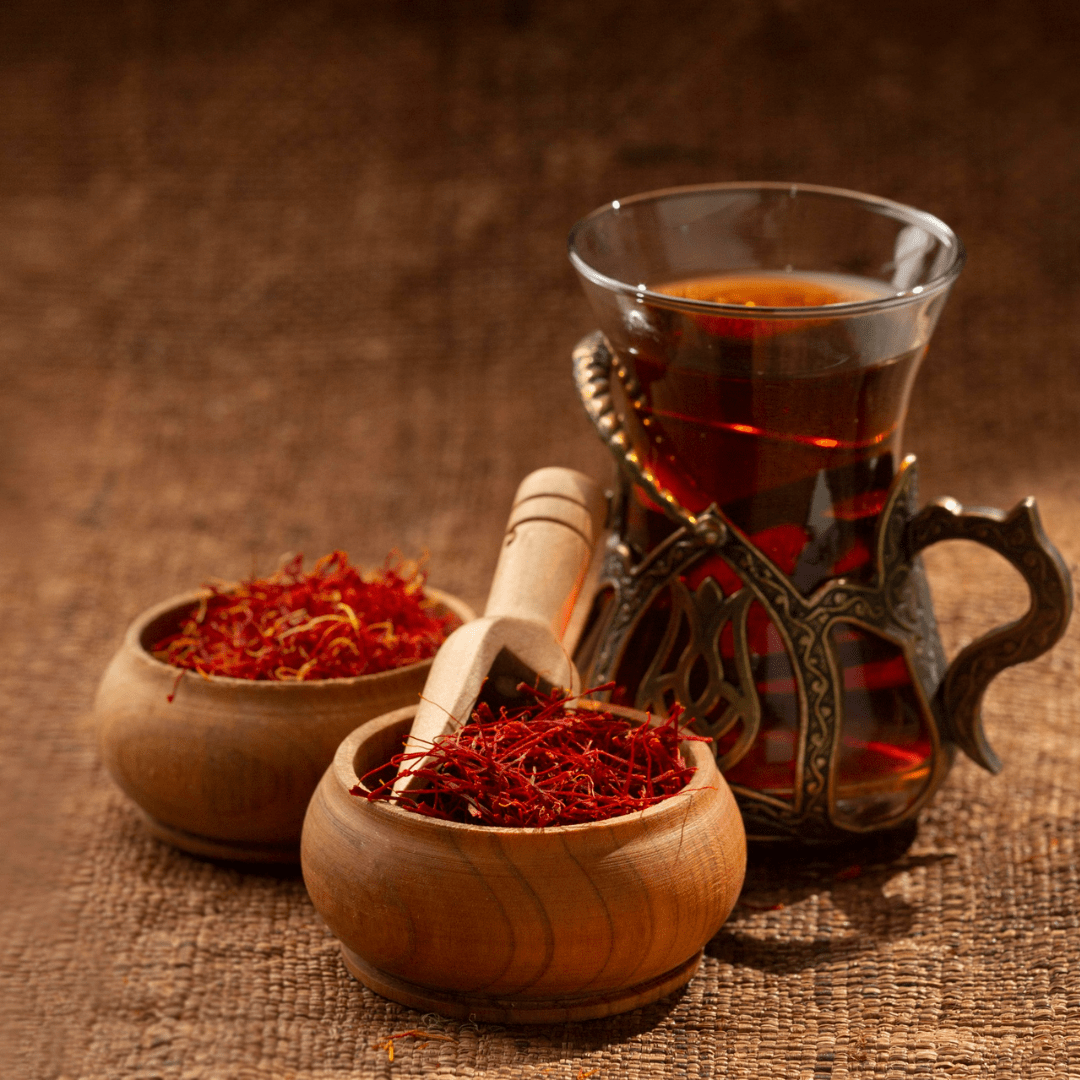
What sets the more special versions apart is saffron. It is one of the most prized ingredients in the region, and adding it to tea has long been a mark of occasion. The colour alone tells you something, a soft golden tone that you do not get from anything else.
Arabian Saffron Chai builds directly on that tradition.
The black tea base gives it structure and depth, something solid to carry the rest. On top of that sit the spices. Cardamom, ginger, and cinnamon bring a warmth that arrives almost straight away, layered rather than sharp. It is the kind of warmth that feels comforting and a little energising at the same time.
The saffron sits just above all of that. It is not dominant, but you notice it. It adds a soft, slightly floral note and that distinctive golden colour, and it lifts the whole thing into something that feels more like an occasion than a habit. It works particularly well on colder mornings, or in the afternoon when you want something to reset around.
There is a functional side to a tea like this, beyond the flavour.
The black tea base brings antioxidants, mainly the theaflavins that form during oxidation, which are often linked to heart health and general vitality. The spices each contribute something of their own. Cardamom, ginger, and cinnamon have long been associated with circulation and digestion, which is part of why spiced tea is so often served after a meal in the region.
Saffron is the interesting one. It has been studied for its antioxidant content, and it is frequently linked to mood, with some traditions valuing it for exactly that. As with most things in tea, it is best not to overclaim. But the broad picture is of a drink that warms, settles, and comforts, which is roughly what it has always been used for.
There is no single correct way to drink it, which is part of the appeal.
Some prefer it strong and plain, letting the spice and saffron carry it. Others take it with milk, which softens the edges and brings out the creaminess in the cardamom. A little sweetness is traditional, though how much is entirely up to you. It is usually served in small glasses, and rarely rushed.
The main thing is that it is shared. A spiced tea like this is made for sitting with, for conversation that goes on longer than you expected.
Arabic tea has never really been about the leaf alone.
It is about warmth, hospitality, and the moment that forms around the cup. Arabian Saffron Chai captures that quite well. It is rich, aromatic, and a little luxurious, but it is also generous in the older sense, something you make to share. And that, more than any single ingredient, is where its real character comes from.